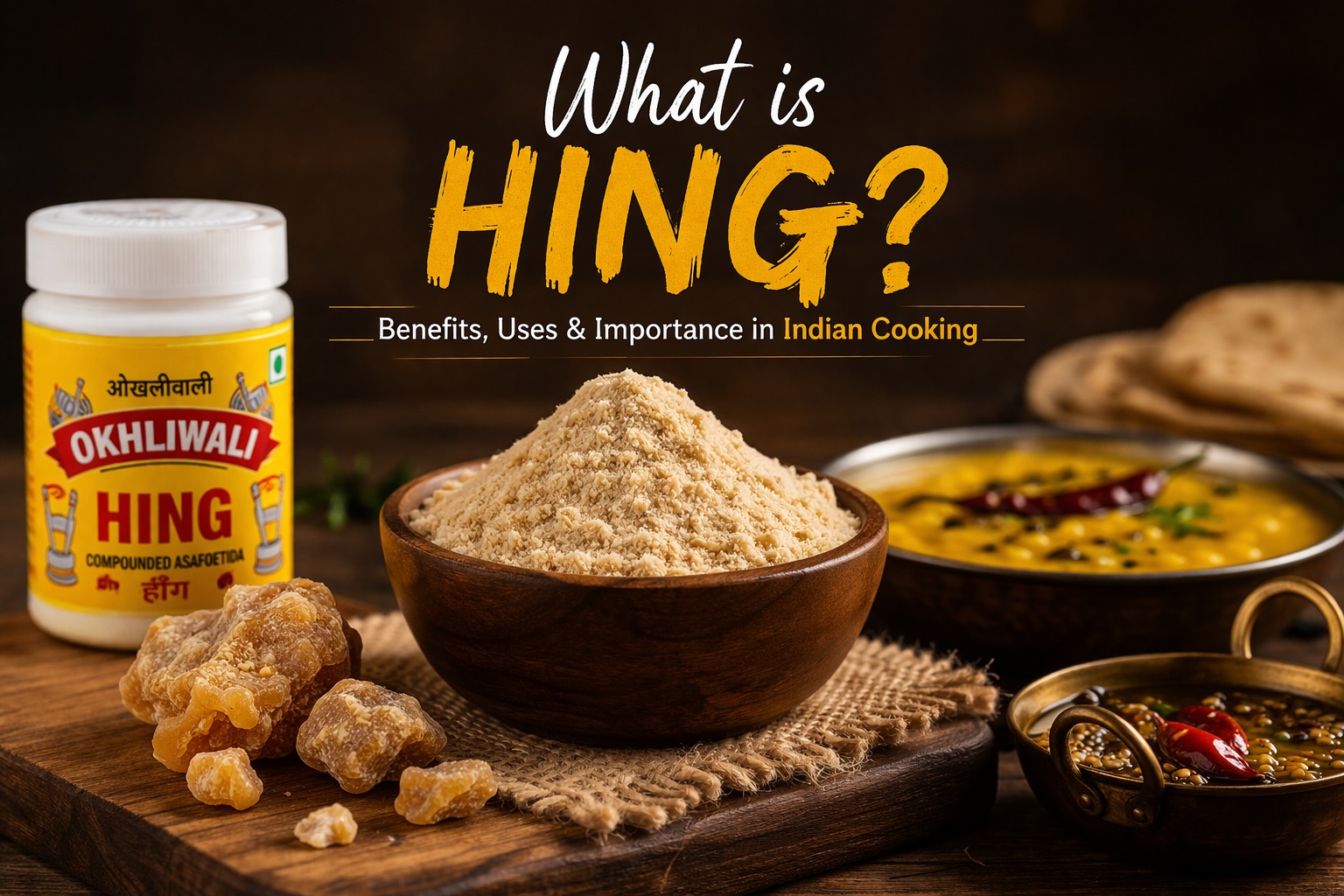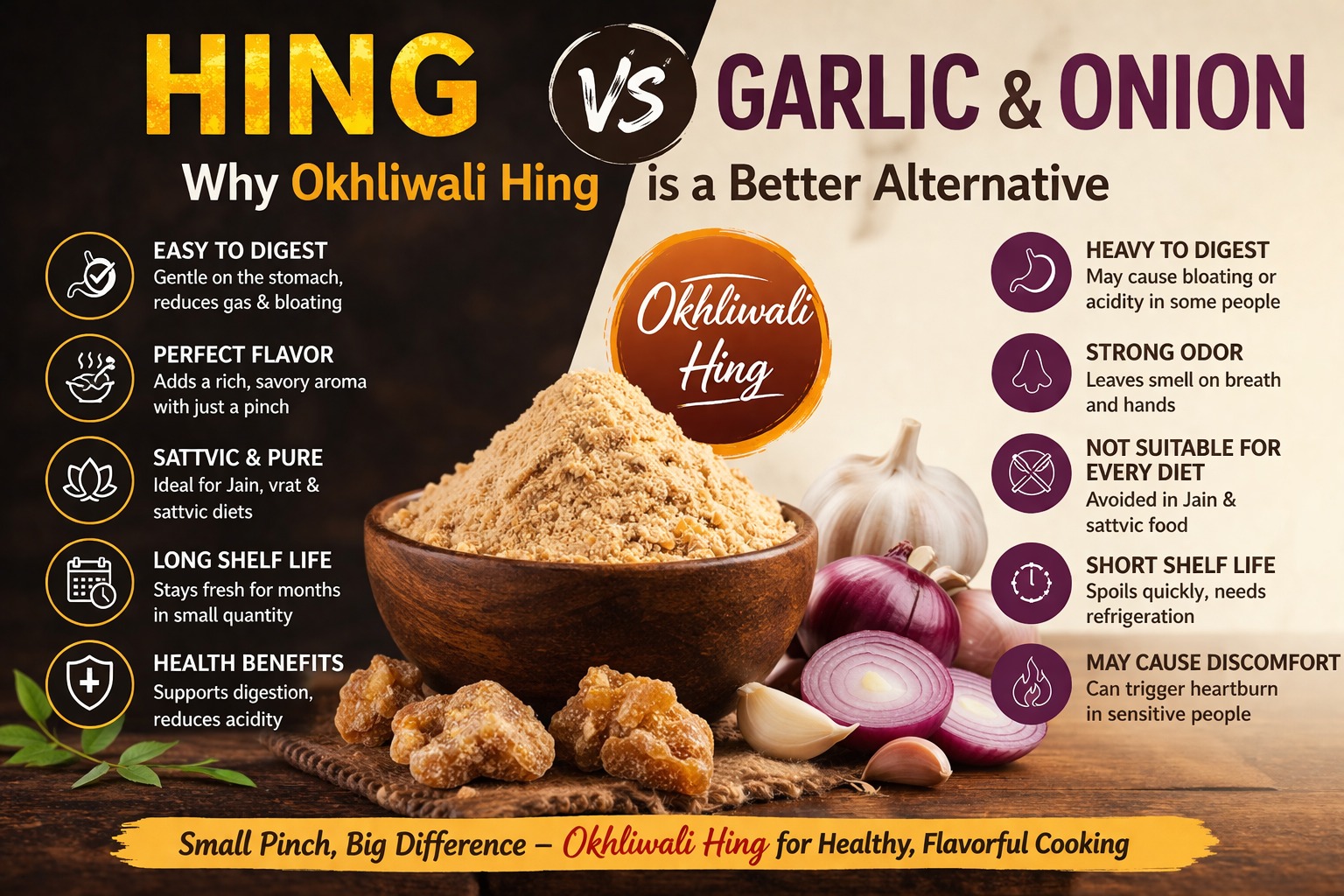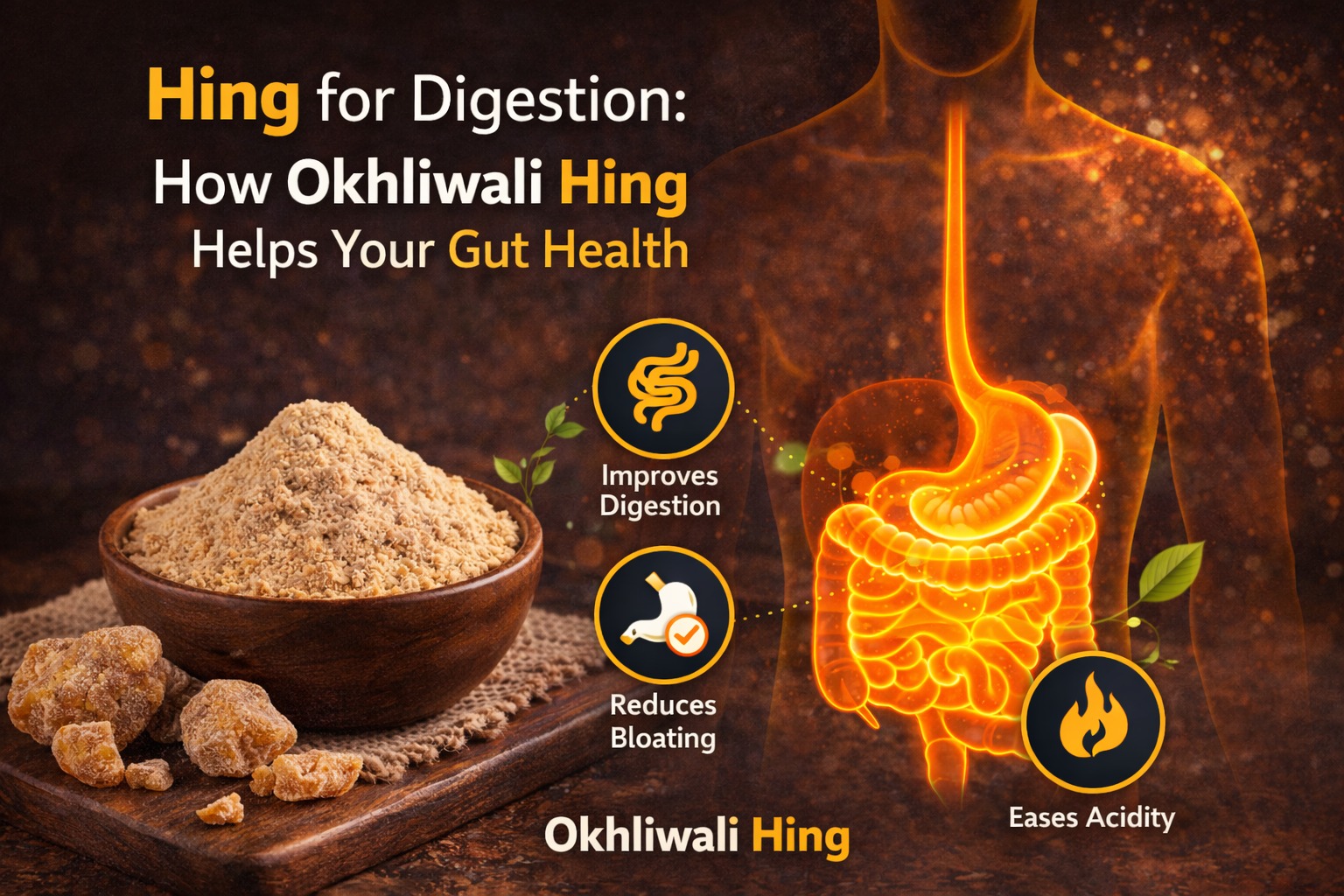
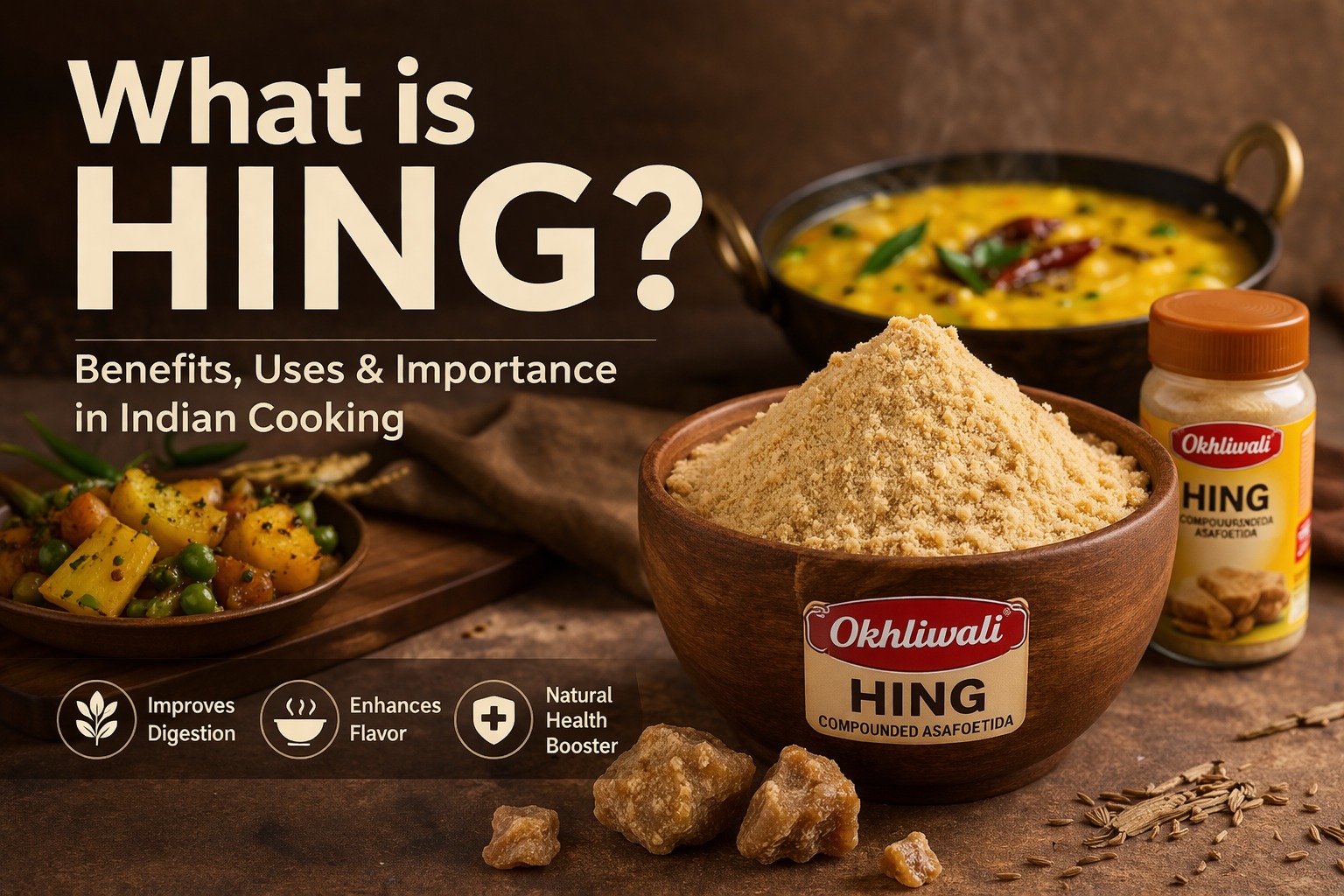
Hing, also known as asafoetida, heeng or asafetida, is a distinctive spice widely used in Indian cooking. It is known for its strong aroma and the characteristic flavour it adds to food when used in a small quantity.
From dal tadka and sabzi to kadhi, sambar, pickles and other traditional recipes, hing is a familiar ingredient in many Indian kitchens.
Although concentrated hing has a strong smell, its aroma changes significantly when it is added to hot oil or ghee during cooking. A small pinch can add depth and character to a dish.
In this guide, you will learn what hing is, where it comes from, how hing is used in Indian cooking, the different types of hing, how to use it correctly, how to choose hing and how to store it properly.
What Is Hing?
Hing is the common Indian name for asafoetida, a resin obtained from certain plants of the Ferula genus.
The resin is processed and commonly sold in different forms, including powder and compounded hing products. Because concentrated hing has a very strong aroma, it is generally used in very small quantities.
Hing is also known by several names:
- Hing
- Heeng
- Asafoetida
- Asafetida
- Hing powder
The word asafoetida is commonly used in English, while hing or heeng is widely used in India.
Why Is Hing Used in Indian Cooking?
Hing is primarily used as an aromatic and flavouring ingredient.
Its distinctive character makes it especially popular in dishes where spices are tempered in oil or ghee.
Hing is commonly used in:
- Dal
- Dal tadka
- Kadhi
- Sambar
- Sabzi
- Aloo dishes
- Beans and legumes
- Pickles
- Chutneys
- Curries
- Tadka
The key to using hing is moderation. Because its aroma is concentrated, only a small amount is usually needed.
How Does Hing Taste and Smell?
Raw or concentrated hing has a very strong and distinctive smell.
However, when it is properly cooked, especially in hot oil or ghee, its aroma becomes more balanced and blends with the other ingredients in the dish.
This is one reason hing is commonly added during tadka or tempering rather than being used directly in large quantities.
The final flavour can vary depending on the type and composition of the hing product.
How to Use Hing in Cooking
One of the simplest ways to use hing is during tadka.
How to Make Hing Tadka
- Heat a small amount of oil or ghee.
- Add cumin seeds, mustard seeds or other tempering ingredients according to the recipe.
- Add a very small pinch of hing.
- Immediately add the prepared dal, sabzi or other dish.
- Mix well and continue cooking according to the recipe.
The exact amount depends on the strength and type of hing you are using.
Start with a small quantity. You can adjust the amount according to your taste, while using too much may overpower the other flavours in the dish.
Where Can You Use Hing?
Hing is versatile and can be used in many traditional Indian recipes.
1. Dal Tadka
A small amount of hing can complement the flavour of dal, especially when added during tempering.
2. Kadhi
Hing can be added to kadhi along with the other tempering spices to create a distinctive aroma.
3. Sambar
Hing is commonly used as part of the seasoning in many sambar preparations.
4. Aloo and Vegetable Dishes
Hing works well in various potato and vegetable preparations.
For example:
- Jeera Aloo
- Aloo Methi
- Mixed vegetable dishes
- Beans and legumes
5. Pickles and Chutneys
Some traditional pickle and chutney preparations also use hing as an aromatic ingredient.
Types of Hing
Hing products can differ in their composition, concentration, texture and intended use.
Understanding the product type can help you choose a hing that suits your cooking needs.
1. Pure Hing or Hing Resin
Pure hing refers to a concentrated form of asafoetida resin.
Because it is highly concentrated, it is generally used in very small quantities.
2. Compounded Hing
Compounded hing is formulated by combining asafoetida with other permitted ingredients.
This type is commonly prepared for convenient everyday cooking and may have a different aroma, texture and strength from concentrated hing resin.
Always check the product label and ingredient information before purchasing.
3. Hing Powder
Hing powder is a convenient form for regular kitchen use.
The strength and composition can vary between products, so it is useful to check the ingredient list, product information and usage instructions.
What Is the Difference Between Pure Hing and Compounded Hing?
The main difference is composition and concentration.
Pure or concentrated hing contains a higher concentration of asafoetida resin, while compounded hing is formulated with other permitted ingredients to create a product suitable for particular cooking and usage requirements.
This means that different products may require different quantities when cooking.
Therefore, don't judge a hing product only by how strong its raw smell is.
Instead, check:
- Ingredients
- Product type
- Manufacturer information
- Packaging
- Net quantity
- Storage instructions
- Shelf life
How to Choose Good Hing
When choosing hing, consider more than just its price or raw aroma.
Check the Ingredient Information
Read the product label to understand what the product contains.
Check the Product Type
Know whether you are buying pure or concentrated hing, compounded hing or another form.
Check the Packaging
Good packaging should protect the product from moisture and help retain its aroma.
Check Manufacturer Information
Look for clear manufacturer or brand information and applicable food-related details on the packaging.
Check Net Quantity
Make sure the pack size matches your intended usage.
Check Shelf Life
Always check the manufacturing and expiry or best-before information provided on the product.
How Should Hing Be Stored?
Hing has a strong aroma, so proper storage is important.
For best storage:
- Keep hing in an airtight container.
- Store it in a cool, dry place.
- Keep it away from moisture.
- Avoid direct sunlight.
- Close the container properly after every use.
An airtight container can also help prevent the strong aroma of hing from spreading to other foods in your kitchen.
How Much Hing Should You Use?
There is no single quantity that works for every hing product.
The required amount can vary depending on:
- Product type
- Concentration
- Recipe
- Quantity of food
- Personal taste
For everyday cooking, start with a small pinch and adjust if needed.
Using too much hing can make its aroma overpower the other ingredients.
Hing in Everyday Indian Recipes
Hing can be used in many everyday dishes.
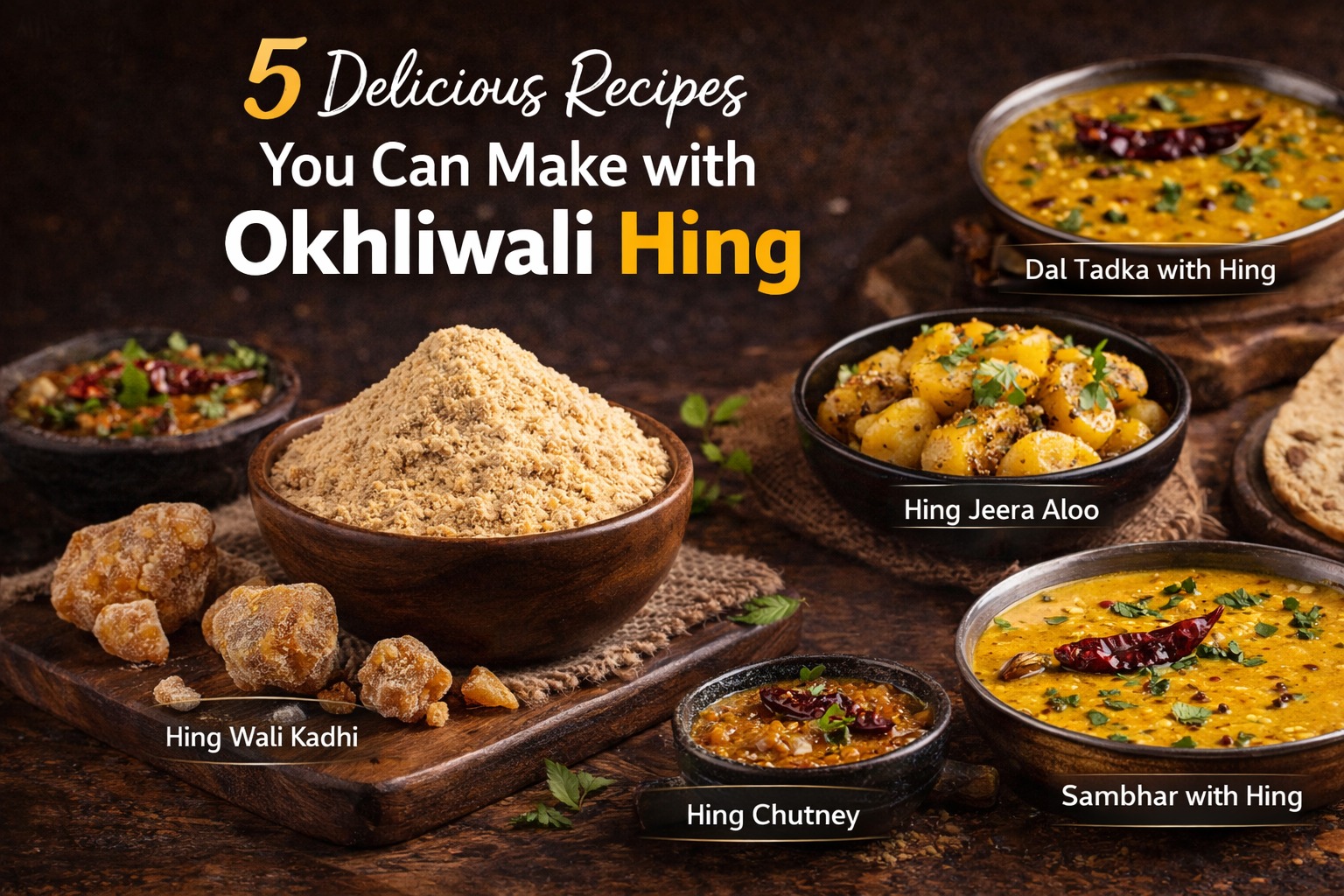
Dal Tadka with Hing
A classic combination where hing is added during tempering.
Jeera Aloo with Hing
Cumin, potato and hing work together to create a simple aromatic dish.
Kadhi with Hing
Hing can be included in the tempering used for kadhi.
Sambar with Hing
Hing is commonly used as part of the seasoning in many sambar preparations.
Aloo Methi with Hing
A small amount of hing can complement the flavours of potato and fenugreek.
Beans and Legumes
Hing is also commonly used in dishes made with beans and other legumes.
How to Use Hing in Tadka
For beginners, tadka is one of the easiest ways to understand how hing works.
A basic method is:
Heat → Temper → Add Hing → Add to Dish
- Heat oil or ghee in a small pan.
- Add cumin or mustard seeds.
- Let the spices temper.
- Add a small pinch of hing.
- Add the tempering to your prepared dish.
- Mix and serve.
The important point is to use hing carefully because its aroma is concentrated.
Is Hing the Same as Asafoetida?
Yes. Hing is the commonly used Indian name for asafoetida.
You may see the terms hing, heeng, asafoetida or asafetida used for this spice.
The actual composition of a packaged hing product can vary, so always check the product label.
Is Hing Used in Large Quantities?
No. Hing is generally used in a small quantity because of its strong and distinctive aroma.
A small amount can be enough to add noticeable flavour to a dish.
If you are trying a new hing product, start with a small amount and adjust according to your recipe and taste.
Can Hing Be Used in Dal?
Yes. Hing is commonly used in dal, especially during tadka.
You can add a small pinch of hing to hot oil or ghee along with your other tempering ingredients before adding the tadka to the prepared dal.
Can Hing Be Used in Sabzi?
Yes. Hing can be used in many vegetable preparations, including potato dishes, beans, legumes and other traditional Indian recipes.
The amount should be adjusted according to the recipe and the strength of the product.
What Is the Best Way to Store Hing?
The best approach is to keep hing:
- Airtight
- Dry
- Away from direct sunlight
- Away from moisture
- In a cool storage area
Always follow the storage instructions printed on your specific product packaging.
Is Every Hing Product the Same?
No. Hing products can differ in:
- Composition
- Concentration
- Texture
- Aroma
- Packaging
- Intended use
For this reason, it is important to read the ingredient list and product information before purchasing.
Frequently Asked Questions About Hing
What is hing?
Hing is the common Indian name for asafoetida, an aromatic spice derived from resin obtained from certain Ferula plants.
What is hing called in English?
Hing is commonly called asafoetida in English. You may also see the spelling asafetida.
What is hing used for?
Hing is primarily used as an aromatic and flavouring ingredient in Indian cooking. It is commonly used in dal, tadka, sabzi, kadhi, sambar, pickles and other dishes.
How do you use hing?
A common method is to add a small amount of hing to hot oil or ghee during tempering before adding the tadka to the prepared dish.
How much hing should I use?
Start with a small pinch. The appropriate amount depends on the product, its concentration, the recipe and your taste.
Can hing be used in dal?
Yes. Hing is commonly used in dal, especially during tadka.
Can hing be used in sambar?
Yes. Hing is commonly used as a seasoning ingredient in many sambar preparations.
How should hing be stored?
Store hing in an airtight container in a cool, dry place away from moisture and direct sunlight.
Is pure hing the same as compounded hing?
No. They can differ in composition and concentration. Check the ingredient information on the product label to understand what you are buying.
Hing and Traditional Indian Cooking
Hing has a distinctive place in Indian cooking because only a small amount is needed to add a recognizable aroma to many dishes.
From a simple bowl of dal to kadhi, sambar, potato dishes and traditional pickles, hing can be part of everyday cooking.
Its usefulness is not about using a large quantity. Instead, the key is understanding which type of hing you are using and how much your recipe needs.
Explore Hing Recipes
If you want to learn how to use hing in everyday cooking, try recipes such as:
- Dal Tadka with Hing
- Jeera Aloo with Hing
- Kadhi Pakora with Hing
- Sambar with Hing
- Hing Wali Moong Dal
- Aloo Methi with Hing
You can explore more Hing Recipes and learn different ways to add hing to traditional Indian dishes.
Explore Okhliwali Hing
If you are looking for hing for everyday Indian cooking, explore the Okhliwali Hing range and choose a product according to your cooking needs and preferred pack size.
You can also explore Rozana Hing for everyday Indian cooking and find a pack size that suits your kitchen needs.
Final Thoughts
Hing, or asafoetida, is a small but distinctive ingredient in Indian cooking.
Its strong concentrated aroma means that only a small amount is generally needed. When used correctly during tadka or cooking, it can complement the flavour and aroma of dishes such as dal, sabzi, kadhi, sambar and traditional recipes.
To choose the right hing, pay attention to the product type, ingredients, packaging, quantity and storage instructions.
If you are new to hing, start with a small amount, experiment with familiar recipes and discover how different types of hing work in your everyday cooking.
Explore Okhliwali Hing and discover new ways to bring the traditional aroma of hing into your kitchen.